Karachi Marks Bleak Eid as Severe Water Crisis Enters Second Month
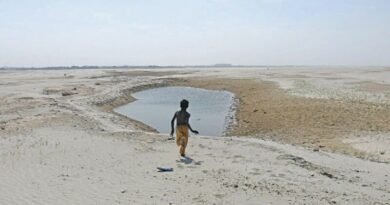
KARACHI: The city celebrated Eidul Azha on Wednesday under the shadow of a deepening water crisis that has now entered its second month, leaving taps dry, tanker queues endless, and residents exhausted.
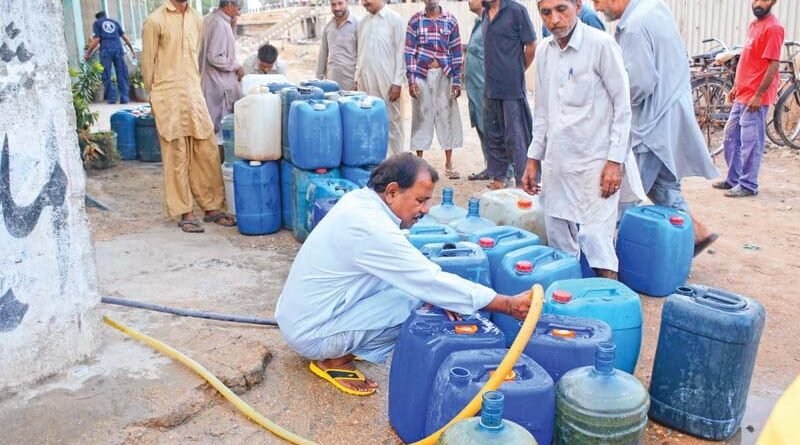
What should have been a day of prayer and festivity instead saw families sacrificing sleep to chase water tankers and draining their savings to secure water for ritual washing, animal care, and basic sanitation. For many, the festival of sacrifice has become a grim struggle for survival.
This is not the first time the city has faced Eid amid severe water shortages. Residents describe it as a painful tradition: the Karachi Water and Sewerage Corporation (KWSC) failing precisely during the city’s most critical moments—Eids, Ramazan, Eid Miladun Nabi, and Muharram—when water is indispensable for both religious rites and daily life.
Since late March, a series of line bursts, underground leaks, power failures at pumping stations, and damage to key mains have crippled supply across the metropolis. Routine chores have turned into daily battles.
Utility Blames Power Outages
The KWSC has maintained that normal supply was ensured during Eid, attributing the disruptions instead to frequent power breakdowns. The utility relies on the city’s power provider for electricity, and officials say abrupt outages damage main lines and disrupt water supply.
Comprehensive arrangements were reportedly made for uninterrupted water and sewage management during the festive season, with executive engineers on standby and staff and machinery available round the clock.
But on the ground, the crisis has hit hardest during Eidul Azha, when water demand surges for cleaning, animal care, and sanitation as families prepare for qurbani.
In Orangi Town, a local shopkeeper said his family was sacrificing a cow at home, but there had been no water supply for days. “We will sacrifice the cow in the morning, and we hoped the utility would help by providing water, but it didn’t,” he said.
Months of Failures
In late March, repeated power outages at critical pumping stations slashed supply during peak summer demand, with tail-end localities in Lyari, Saddar, Orangi, and Korangi reporting dry lines for days.
Over the past two months, opposition parties in the Sindh Assembly and the Karachi Metropolitan Corporation City Council have repeatedly criticized the provincial government and the city’s sole water utility for failing to ensure a smooth supply.
In April, the city faced a 48-hour shortfall of 250 million gallons per day (MGD) as work began to connect a new line to the existing network at the Dhabeji pumping station. But supply remained disrupted for two weeks after another main line ruptured during a sudden power breakdown.
May began with three 72-inch diameter lines at the Dhabeji pumping station bursting on a Monday following a power breakdown, causing a further shortfall.
Tanker Prices Soar as Desperation Grows
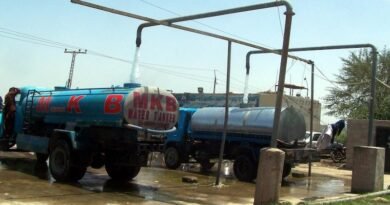
While taps ran dry for weeks in many localities and for over two months in others, desperate residents have turned to tankers. But with supply so limited, most wait seven to ten days for one, and many never receive it at all. Prices for water tankers have since doubled.
In Malir’s Kholchrapar area, a resident said it had been 11 weeks without water in his lane. “We beg for tankers every day. They take Rs8,000 and say ‘wait your turn.’ What are we supposed to do?”
A resident of PECHS said he had registered for a KWSC tanker ten days ago. “No one came, and I don’t know what to do tomorrow morning.”
Residents in several areas, including Clifton, DHA, Gulshan-i-Iqbal, Gulistan-i-Jauhar, and North Nazimabad, report that private tankers have doubled their rates. One resident said tankers are now asking for Rs12,000, up from Rs6,000 last month.
In low-income areas and shantytowns, vendors on pushcarts, donkey carts, and Suzuki pickups selling small tanks are also charging desperate residents exorbitant prices.
Tanker Service Suspended on Eid Days
Meanwhile, the water utility has announced that the water tanker service will remain suspended on the first two days of Eid.
It is worth noting that only 15 to 18 million gallons per day (MGD) of water is supplied through tankers across the city, which receives 650 MGD against a demand of over 1,250 MGD.